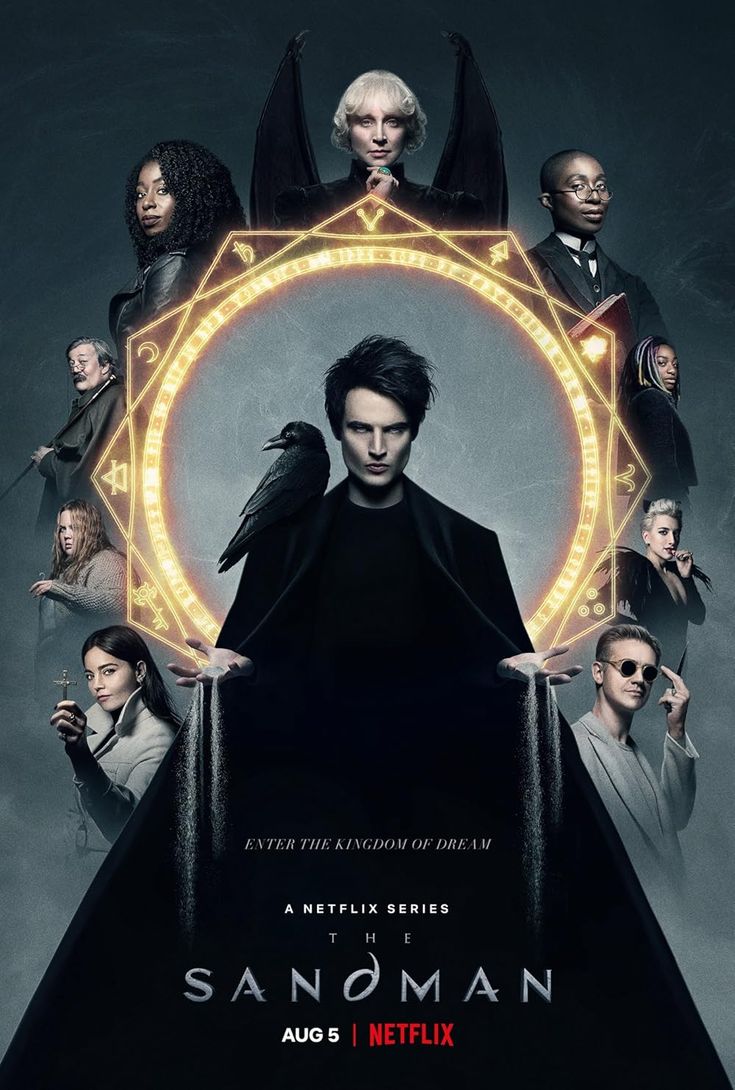
The Sandman is not your typical fantasy story. It is slow, thoughtful, and deeply symbolic—designed for viewers who enjoy layered storytelling and rich world-building.
From its opening moments, the film draws you into a universe where dreams shape reality and stories carry immense power.
The narrative centers on Dream, a mysterious and ancient being responsible for the realm of dreams. Rather than relying on constant action, The Sandman focuses on atmosphere, dialogue, and emotional weight. The story unfolds like a myth being whispered, inviting viewers to listen closely rather than rush ahead.
One of the strongest elements of The Sandman is its visual style. The cinematography is hauntingly beautiful, blending darkness with elegance. Dreamscapes feel surreal yet meaningful, while the real world carries a quiet heaviness that mirrors the characters’ inner struggles.
Every frame feels intentional.
The performances are restrained but effective. The lead portrayal of Dream captures both authority and vulnerability, making the character feel distant yet emotionally compelling. Supporting characters add depth to the story, each representing different aspects of humanity—fear, hope, loss, and desire.
Pacing may divide viewers. The Sandman takes its time, favoring reflection over spectacle. However, this deliberate approach allows its themes—responsibility, redemption, and the consequences of power—to resonate more deeply.
The Sandman -Conclusion
The Sandman is a bold and atmospheric fantasy that prioritizes storytelling over action. It’s a visually striking, emotionally rich experience best suited for viewers who enjoy dark mythology, philosophical themes, and slow-burning narratives.